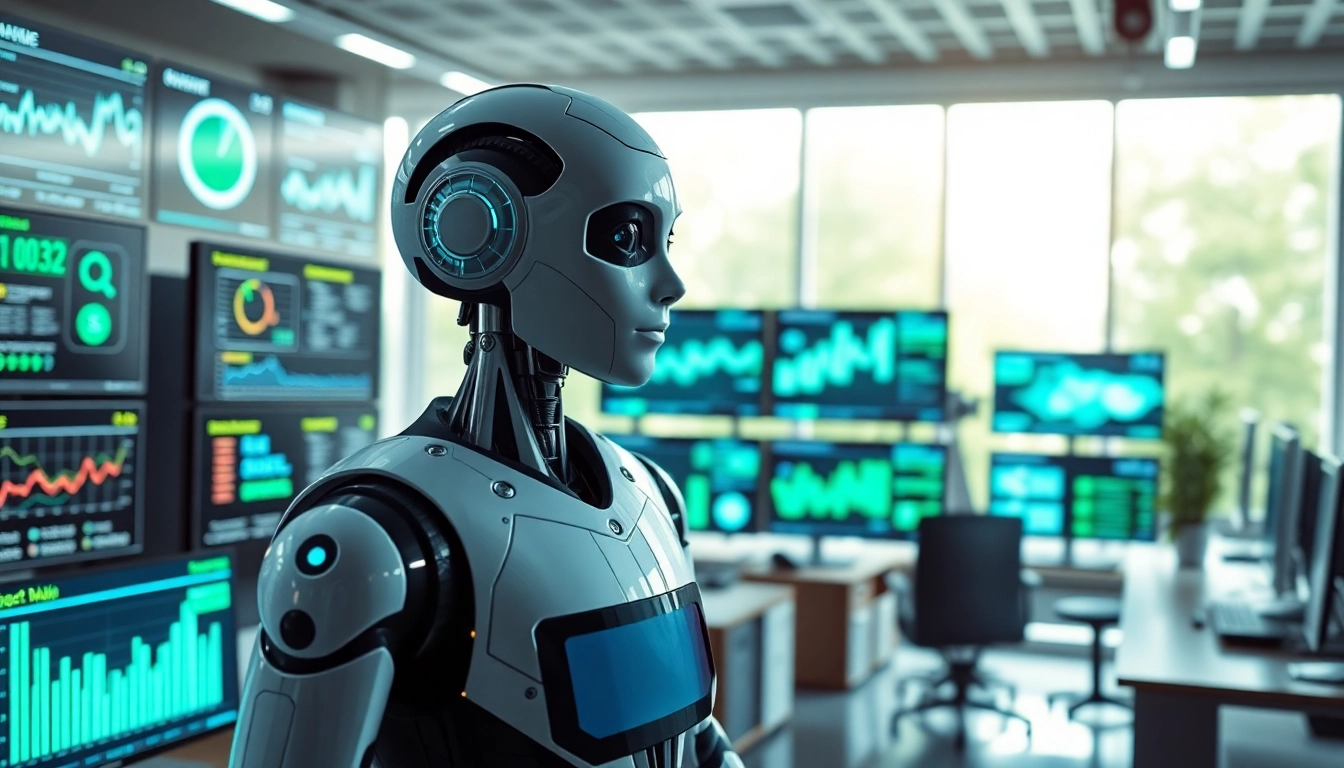
Introduction to Ai agents
In the vast landscape of artificial intelligence, Ai agents play a pivotal role by acting as autonomous entities capable of perceiving their environment, interpreting data, and performing tasks without human intervention. These agents are equipped with various functionalities that enable them to engage dynamically with users and environments, making them an integral part of modern technology solutions.
Defining Ai agents
At their core, Ai agents are defined as systems that autonomously respond to stimuli within their environment. They are built to pursue specific objectives, utilize algorithms, and enhance their performance over time through machine learning and data assimilation. The definition is not only broad but inclusive of various forms and functionalities within the tech spectrum, ranging from simple chatbots to complex systems capable of intricate reasoning and decision-making.
History and evolution of Ai agents
The concept of intelligent agents has evolved from rudimentary rule-based systems in the early stages of AI development to sophisticated models that incorporate deep learning and reinforcement learning. Initially, Ai agents operated under strict parameters, making decisions based solely on programmed instructions. As technology advanced, so too did the algorithms, paving the way for agents that learn from experience and adapt their strategies accordingly. Historical milestones include the development of early expert systems in the 1970s and the integration of neural networks in the 1990s, leading to the modern era of Ai agents.
Importance in modern technology
The significance of Ai agents in contemporary technology cannot be overstated. They enhance operational efficiency by automating routine tasks, facilitate personalized user experiences, and support decision-making processes across various industries. From customer service automation to supply chain optimization, Ai agents exhibit capabilities that contribute to organizational agility and responsiveness. Their ability to analyze vast datasets in real-time enables businesses to derive actionable insights and maintain a competitive edge.
How Ai agents Work
Key components of Ai agents
The architecture of Ai agents is multi-faceted, comprising several key components that work in tandem. These include:
- Perception: The ability of an Ai agent to gather data from its environment using sensors or data input methods.
- Reasoning: Utilization of algorithms to interpret data and make decisions based on the collected information.
- Action: The ability to execute tasks autonomously based on the agent's reasoning processes.
- Learning: Incorporating feedback loops that allow the agent to improve its functions over time.
- Interaction: The capacity to communicate or engage with users and other systems effectively.
Processes and workflows in Ai agents
Ai agents operate through structured workflows that dictate their processes. Typically, these workflows encompass defining goals, perceiving environmental cues, analyzing inputs, reasoning to derive conclusions, and executing actions. For instance, in a customer service setting, an Ai agent might assess incoming queries, identify common themes or urgency levels, and respond appropriately or escalate to a human representative when needed. Such workflows are meticulously designed to ensure efficiency and adaptability, allowing for seamless operation even amid dynamic conditions.
Integration with other technologies
Successful Ai agents often integrate with other technological frameworks to enhance their functionalities. For example, they can interface with cloud computing infrastructure for data storage and processing, leverage APIs to connect with social media platforms, or use machine learning models for predictive analytics. This integration allows Ai agents to extend their capabilities and provide more nuanced and effective solutions, such as personalized recommendations in e-commerce or data-driven insights in business intelligence.
Types of Ai agents
Reactive Ai agents
Reactive Ai agents are designed to respond to specific stimuli or inputs without retaining any internal state. They function on a simple principle of "if-then" rules and excel in predictable environments. Their primary advantage lies in their speed and efficiency in reacting to changes, making them ideal for tasks like game AI or basic customer interactions, where the context does not require memory of prior interactions.
Deliberative and hybrid Ai agents
Deliberative Ai agents, in contrast, utilize internal models of their environment to make decisions. They can plan and reason over long time frames, considering past experiences and potential future scenarios. Hybrid agents combine the strengths of both reactive and deliberative models to create a balanced approach that allows for quick responses as well as in-depth planning capabilities. These types of agents are suitable for complex operational settings, such as autonomous vehicles where both immediate reactions and strategic planning are essential.
Use case scenarios for different types
Various application scenarios dictate the need for different types of Ai agents:
- Reactive Agents: Typically used in chatbots that handle FAQs or support systems where interactions do not require context retention.
- Deliberative Agents: Applied in scenarios where complex planning and reasoning are crucial, such as healthcare decision support systems that evaluate numerous factors before recommending a treatment.
- Hybrid Agents: Common in dynamic applications like stock trading, where rapid response to market changes, as well as long-term investment strategies, are necessary.
Performance Metrics for Ai agents
Evaluating effectiveness
The evaluation of Ai agents is essential to ensure their effectiveness and reliability. Common methods involve comparing actual outcomes against expected results, taking into account operational accuracy, response times, and user satisfaction levels. Regular assessments can identify areas needing improvement and optimize Ai agent performance.
Key performance indicators
Key performance indicators (KPIs) for Ai agents typically include:
- Success Rate: The proportion of successful task completions versus total attempts.
- Response Time: The average time taken to respond to queries or execute commands.
- User Engagement: Metrics measuring how effectively the Ai agent interacts with users, including feedback and follow-on interactions.
- Learning Rate: The agent's ability to improve performance over time based on user interactions and feedback.
Improving Ai agents through feedback
Continuous improvement is a hallmark of effective Ai agents. Implementing feedback loops allows for real-time learning and adaptation. By analyzing user interactions and outcomes, Ai agents can adjust response strategies, refine workflows, and enhance decision-making processes. This iterative refinement is crucial for maintaining relevance and efficacy in rapidly changing environments.
Future Trends and Challenges for Ai agents
Emerging technologies affecting Ai agents
The landscape of Ai agents is on the brink of significant evolution, influenced by emerging technologies such as quantum computing, advanced natural language processing, and enhanced machine learning frameworks. These advancements promise to elevate the capabilities of Ai agents, allowing them to handle complex tasks more efficiently and intuitively. Furthermore, the convergence of Ai with Internet of Things (IoT) creates opportunities for agents to operate across interconnected systems, leading to smarter and more proactive applications.
Ethical considerations and challenges
As Ai agents become increasingly integrated into everyday life, ethical considerations surface regarding their design and implementation. Challenges such as bias in algorithms, privacy concerns in data handling, and accountability in decision-making processes need careful examination. Establishing ethical models and guidelines will be fundamental in fostering trust and acceptance of Ai technologies within society.
Predictions for the future of Ai agents
Looking ahead, the future of Ai agents is bright with potential. Predictions suggest a move towards more emotionally intelligent assistants capable of understanding human emotions and responding empathetically. The evolution will likely see an increase in collaborative Ai agents that work alongside humans, enhancing productivity and creativity while alleviating mundane tasks. This shift towards human-Ai collaboration heralds a new era in which Ai agents are viewed as essential partners in various fields.
Frequently Asked Questions
What is an Ai agent?
An Ai agent is an autonomous system that perceives its environment, reasons about it, and takes actions to achieve specific goals. They can learn from experience and improve their performance over time.
How do Ai agents learn?
Ai agents learn through machine learning techniques, utilizing data from their environment and user interactions to refine their algorithms and improve decision-making capabilities.
What are the main types of Ai agents?
The main types of Ai agents include reactive agents, deliberative agents, and hybrid agents, each serving different use cases based on their capabilities and functionalities.
How are Ai agents evaluated for performance?
Performance evaluation typically includes metrics such as success rate, response time, user engagement, and learning rate, ensuring effectiveness and continuous improvement.
What ethical challenges do Ai agents face?
Ai agents face ethical challenges including algorithmic bias, data privacy issues, and concerns over accountability for their decisions. Addressing these is critical for societal acceptance.